
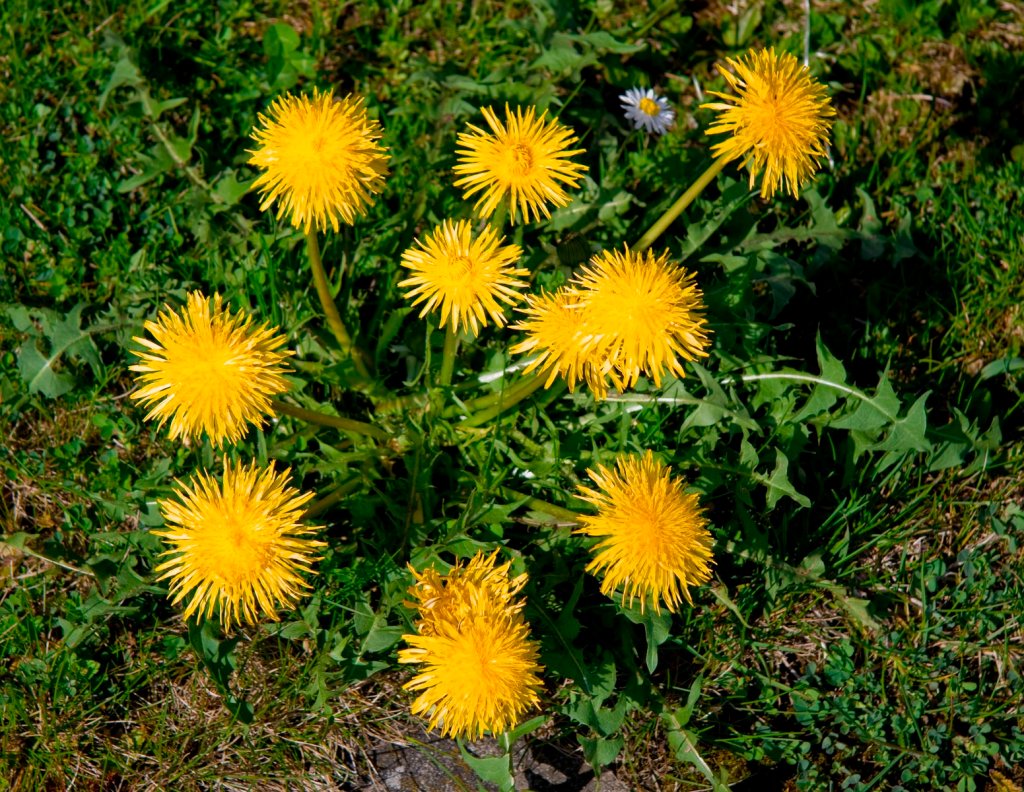
Here they come! At least here in the Pacific Northwest we are in an emerging land of yellow! Yes, I speak of Dandelions. There is so much to say about these powerhouse “weeds” aka: plants. You can use the flowers, the leaves and the roots. Generally, we don’t eat the stems due to their latex “milk” content. What you need to know is that eating dandelion greens as a spring edible is a fantastic way to integrate nutritious, wild-grown food into your diet. Here are several key points to consider about harvesting and consuming dandelion greens:
- Nutritional Value: Dandelion greens are highly nutritious. They are packed with vitamins A, C, E, and K, and are rich in minerals like calcium, potassium, iron, and magnesium. They also contain a good amount of fiber and antioxidants, which contribute to overall health and wellness.
- Harvesting: The best time to harvest dandelion greens is in early spring before the flowers appear, as this is when they are the most tender and least bitter. Choose young leaves for a milder flavor. It’s also advisable to pick dandelions from areas that are free from pesticides, herbicides, and pollution, such as your own backyard or other safe, wild areas. During this time, the flowers are starting to emerge, but there are waves of growth periods that you can enjoy. Go look for those babies!
- Preparation: Dandelion greens can be eaten raw or cooked. Washing them thoroughly is crucial to remove dirt and potential pesticides. Raw dandelion greens can be bitter, so many people prefer to blanch them in boiling water for 20 to 30 seconds to reduce bitterness. They can be added to salads, sautéed, or used in soups and smoothies. You can dry the leaves and add those to tea, I like them with a peppermint or spearmint leaf to wrangle the more aggressive taste of Dandelion leaf tea. Plus, the mint adds a great benefit to your gut health.
- Taste and Culinary Uses: The taste of dandelion greens is described as earthy and bitter, which can add a unique flavor profile to dishes. They can be used similarly to other leafy greens like spinach or kale. Mixing them with sweeter or more neutral-tasting ingredients can balance their bitterness.
- Health Considerations: While dandelion greens are generally considered safe for most people, they can interact with certain medications, such as diuretics, blood thinners, and antibiotics. If you’re taking any medications, it’s a good idea to consult with a healthcare professional before adding significant amounts of dandelion greens to your diet.
- Cultural and Historical Aspects: Dandelion greens have been used in traditional medicine and culinary practices around the world for centuries. They were traditionally used for their diuretic properties, to support liver health, and to treat various ailments.
Incorporating dandelion greens into your diet is a sustainable and nutritious choice, offering a variety of health benefits and adding diversity to your meals. As with any foraged food, proper identification and knowledge about safe harvesting practices are essential to enjoy these greens safely. Remember, that Dandelion has smooth textured, jagged edged leaves with a predominant midrib. Also, when flowering, Dandelion has one flower per stalk. There are many other in the Taraxacum genus or Asteraceae family that are similar but different enough, such as having hairy leaves or multiple flowers per stalk/stem. Pick clean!
At one point, one of my posts was commented on by someone who mentioned something about dandelions in the bible. I couldn’t find that passage, so I did a bit of research. My conclusion is that the bible from my youth simply didn’t have that information in it. My bible and I are simply roommates now and it reminds me of some of my roots.
For information purposes though I found this bit of information interesting:
The plants and herbs cited in the Bible often have significant cultural or religious symbolism, and many are native to the Middle East and surrounding regions. Given the vast array of plant life mentioned and alluded to in biblical texts, the absence of dandelions is likely due to their geographical distribution and the types of plants that were most relevant to the lives and teachings of the people in biblical times.
Dandelions (Taraxacum officinale) are native to Eurasia and have been spread widely around the world. They have been used for centuries in traditional medicine and as food sources due to their nutritional content and purported health benefits. While dandelions as we know them might not have been directly mentioned or highlighted in the Bible, the principles of using the natural world for sustenance and healing are themes that can be found within biblical texts.
The Bible does reference a variety of other plants and herbs, often imbuing them with symbolic meanings or using them to illustrate moral and spiritual lessons. Plants like figs, olives, vines, and wheat are mentioned frequently, representing fertility, peace, prosperity, and the sustenance provided by God to his people.
In lieu of a specific biblical story about dandelions, the broader biblical narrative encourages a respectful and mindful approach to nature, emphasizing the provision and beauty it offers to mankind. I whole heartedly agree with this!
When I inquired as to what was meant by “vines” I was met with the following info:
In the Bible, several types of vines are mentioned, most notably grapevines. Grapevines and their fruit, grapes, hold significant symbolic meaning throughout the biblical text, often representing fertility, prosperity, and blessings. They are also associated with the production of wine, which itself carries various symbolic meanings, including joy, celebration, and, in the context of Christian symbolism, the blood of Christ.
Key Biblical References to Vines:
- Fruitfulness and Blessing: In many instances, the vine is used as a symbol of fruitfulness and God’s blessings. For example, in Genesis, when Noah plants a vineyard, it signifies the restart of agriculture and civilization after the flood.
- Israel as a Vine: The metaphor of Israel as God’s vineyard or vine appears in several books. For instance, Isaiah 5:1-7 describes Israel as the vineyard of the Lord, reflecting on the expectation of justice and righteousness from the people of Israel and the disappointment in their failure to bear the expected “fruits.”
- Teachings of Jesus: In the New Testament, Jesus uses the vine as a metaphor for spiritual relationships and teachings. John 15:1-5 is one of the most famous passages where Jesus says, “I am the true vine, and my Father is the gardener…I am the vine; you are the branches. If you remain in me and I in you, you will bear much fruit; apart from me you can do nothing.”
- Vineyards as Parables and Teachings: Vineyards, the place where vines grow, are often used in Jesus’ parables to illustrate various moral and spiritual lessons. The Parable of the Vineyard Workers (Matthew 20:1-16) is an example, emphasizing the generosity of God and the concept of equality in the kingdom of heaven.
Grapevines in the Bible are deeply intertwined with the culture and daily life of the ancient Near Eastern and Mediterranean peoples. They serve not only as sources of physical nourishment but also as rich symbols in the spiritual and moral teachings within the biblical texts.
Isn’t that interesting! I thought so. Given the nature of Christianity, I am sure I could go even further back to see where these symbolized plants are embedded in predating religion/spirituality. Of course, I only have so much time in a day, so I’ll draw the finish line there for now. I mean it has to go somewhere, doesn’t it?
If you don’t have Dandelions, you can always grow them from seed, but my very loud recommendation is to do so either in a field you don’t manage or in a contained area where their many many seeds will not fly into other garden beds, lawns, etc. that you don’t want them to appear in.
If you want to grow some, you can even experiment with other varieties. The nutrient content is very similar.
https://amzn.to/3xdG7in – this particular pack has THREE varieties. Fun!!

