
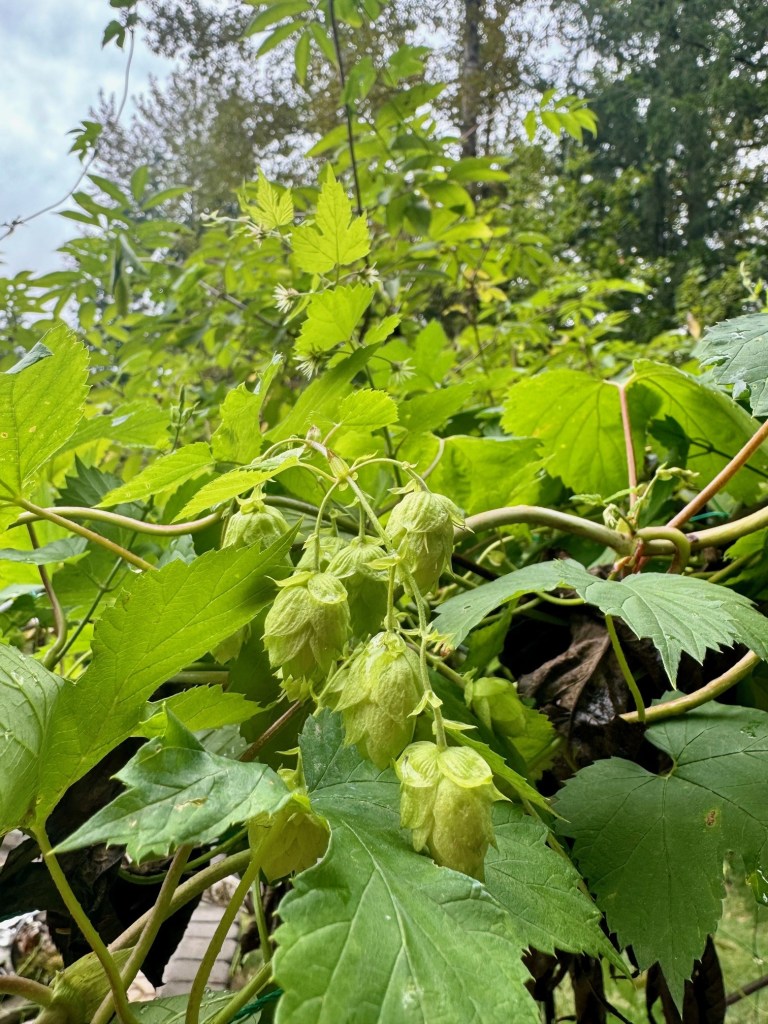
Enter my delight and reverence for a plant so well known to the public for its use in creating ale/beer/lager, etc. I am not a beer connoisseur; however, I do love me some herbaceous (plants that aren’t woody and die back each year) plants that have secret powers! Of course, I love it even more when those powers are no longer a secret! You may have heard of Nervines. NER-VINES. To put it simply a nervine is a type of herb that has a beneficial effect on the nervous system. Nervines are used in herbal medicine to support, calm, or restore the nervous system, helping to manage stress, anxiety, nervous tension, and related conditions. They can be classified into different categories based on their specific effects. Hops are one such herb!
Hops (Humulus lupulus) are widely known for their use in brewing beer, but they also have a range of medicinal properties. The herbal uses of hops are primarily due to the presence of various bioactive compounds, including flavonoids, bitter acids, and essential oils. So, let’s talk about that a bit.
Key Compounds in Hops:
Bitter Acids
- Alpha Acids (Humulone, Cohumulone): These are primarily responsible for the bitter taste in beer. They also possess anti-inflammatory, antimicrobial, and potential anticancer properties.
- Beta Acids (Lupulone, Colupulone): These have antimicrobial and anti-inflammatory properties.
Flavonoids:
- Xanthohumol: A prenylated flavonoid with strong antioxidant, anti-inflammatory, antiviral, and anticancer properties. It’s one of the most studied compounds in hops for its potential health benefits. Yay for studies!
- 8-Prenylnaringenin: Known as one of the most potent phytoestrogens, this compound can mimic estrogen’s effects in the body, making it useful for managing menopausal symptoms. Being one of the millions of women looking for support through perimenopause, this is VERY interesting to me.
Essential Oils:
- Myrcene: Known for its sedative effects, myrcene is also found in other plants like lemongrass and thyme.
- Humulene: This terpene has anti-inflammatory and antibacterial properties.
- Caryophyllene: It acts as an anti-inflammatory and can interact with cannabinoid receptors, similar to compounds found in cannabis.
Herbal Uses of Hops (similar info to above, but broken down differently for neurodiversity’s sake):
Sedative and Relaxant:
- Hops have been traditionally used for their calming effects. They can help alleviate anxiety, stress, and insomnia. They are often included in herbal teas or sleep aids. Remember that term nervine that we were talking about earlier?
Digestive Aid:
- The bitter compounds in hops stimulate appetite and promote digestion. They can be used to relieve indigestion and reduce bloating.
Menopausal Relief:
- Due to the presence of phytoestrogens like 8-prenylnaringenin, hops can be used to help alleviate menopausal symptoms, such as hot flashes and mood swings.
Antimicrobial and Anti-inflammatory:
- The antimicrobial properties of hops make them useful in treating minor infections, and their anti-inflammatory properties can be beneficial for conditions like arthritis.
- Antioxidant and Anticancer Potential:
- Compounds like xanthohumol have been studied for their potential to prevent or treat certain types of cancer due to their antioxidant and anti-inflammatory properties.
Forms of Use:
- Tinctures and Extracts: Concentrated forms of hops can be taken as drops to promote relaxation and digestion.
- Teas and Infusions: Hops can be steeped in hot water to create a soothing tea that helps with sleep and stress.
- Capsules: Standardized hop extracts are available in capsule form for ease of use, especially for menopausal symptoms.
- Topical Applications: Hops extracts can be found in some topical creams and ointments designed to relieve pain and inflammation.
Precautions:
- Sedation: Hops can cause drowsiness, so they should be used with caution, especially if driving or operating heavy machinery. Remember that term nervine we were talking about earlier? 🙂
- Allergies: Be aware, some people might be allergic to hops, particularly those sensitive to plants in the Cannabaceae family.
- Hormonal Effects: Due to their phytoestrogen content, hops may not be suitable for individuals with hormone-sensitive conditions.
In conclusion, Hops offer a wide range of health benefits, particularly in the areas of relaxation, digestion, and hormone regulation. Their diverse array of bioactive compounds makes them a valuable herb in both traditional and modern herbal medicine. I have a tea blend that I use them for. I have also used hops in salves for skin irritation. I mean, if you look at the laundry list of great superpowers, you can see that there is so much work that can be done here in partnering with this plant.
I’m growing a few varieties of hops this year. They are cultivars that do well in the PNW’s West coast side climate. The picture above is from my garden. If I grow it, I endorse it, big time. There is only so much room after all. If you aren’t growing hops or don’t have a hop farm near you, you can always purchase some nice, dried hops to work with.
Here are a few links for you to visit for easier access to this lovely plant in dried and packaged form:
If you choose to experiment with hops, please do your knowledge check and know up front which plants you may be allergic to. It goes without saying but I have to say it anyway, you should always confirm your plant via positive id if you plant to collect them at a neighbor’s farm or some such and you should speak with your care provider to see if they have any concerns before consuming home apothecary remedies.
 Ministry of Making