
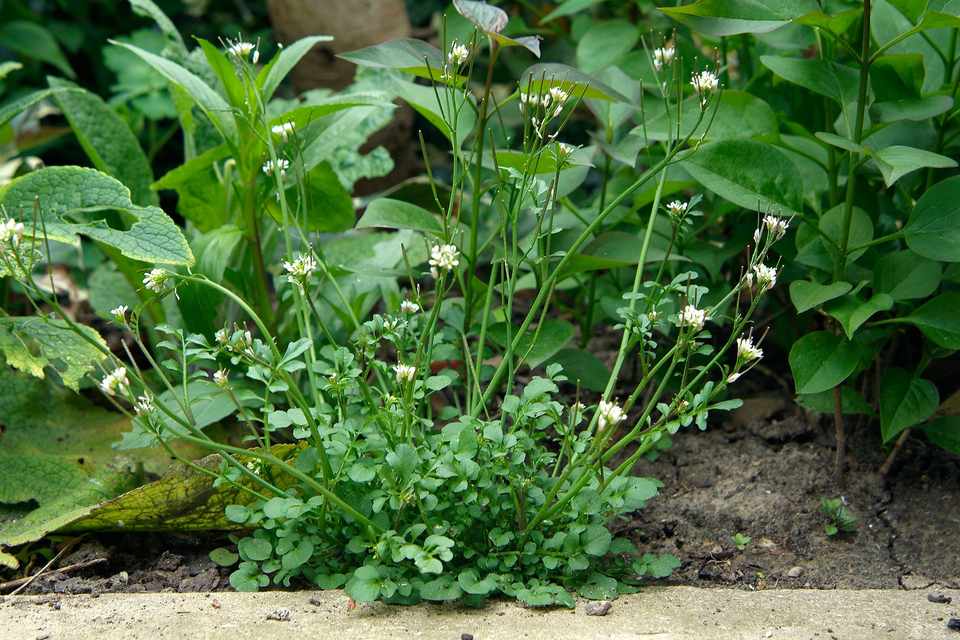
Do you see them? All the little garden bed visitors. All the early green in the fields and lawns. There’s a good chance that it may be a species of Bittercress, also known as Cardamine. Cardamine is a genus of flowering plants in the family Brassicaceae. Several species of bittercress are edible and can be foraged as spring greens. One of the most common edible bittercress species is Cardamine hirsuta, also known as hairy bittercress or shotweed. Yummy doesn’t that sound delicious! Well, it IS! If you feel like you are now tired of the store produce section of lettuces or the winter growing Kales and such, then give these a try for a little Spring flavor. Just know what you are picking and pick clean!
Here are some key characteristics and information about hairy bittercress:
- Appearance: Hairy bittercress is a low-growing, annual or biennial plant that typically reaches a height of about 10-40 cm (4-16 inches). It has compound leaves that are deeply lobed and serrated, with small white flowers that appear in clusters at the top of the stems.
- Habitat: It is commonly found in lawns, gardens, fields, and disturbed areas throughout North America, Europe, and Asia.
- Flavor and Culinary Use: As the name suggests, bittercress has a slightly bitter taste, especially when it matures. However, when harvested young, before the plant begins to flower, the leaves have a milder flavor. The tender leaves can be added raw to salads or sandwiches, or cooked and used as a spinach substitute in various dishes. Some people also enjoy the peppery flavor of the flowers. If you are curious and know what you’re looking at, pick a little fresh from those garden beds that are pesticide free and have a taste!
- Nutritional Value: Bittercress is rich in vitamins and minerals, including vitamins A and C, calcium, iron, and potassium.
- Foraging: When foraging for hairy bittercress, it’s important to harvest the leaves when they are young and tender, preferably before the plant starts to flower. This ensures a milder flavor and better texture. Be sure to gather bittercress from areas that have not been treated with pesticides or other chemicals.
- Precautions: As with any wild plant, be certain of the plant’s identification before consuming it. Additionally, avoid harvesting bittercress from areas that may be contaminated with pollutants or toxins.
Overall, hairy bittercress is a nutritious and versatile spring green that can be enjoyed in a variety of culinary applications when harvested responsibly.
Wavy bittercress, also known as Cardamine flexuosa, is another species of bittercress that is edible and can be foraged as a spring green. Here are some key points about wavy bittercress:
- Appearance: Wavy bittercress is similar in appearance to other bittercress species. It is a low-growing plant with compound leaves that are deeply lobed and serrated. The leaves are arranged alternately along the stem. Like other Cardamine species, it produces clusters of small white flowers.
- Habitat: Wavy bittercress is native to Europe and Asia but has been introduced to North America and other regions. It can be found in similar habitats to other bittercress species, including lawns, gardens, fields, and disturbed areas.
- Flavor and Culinary Use: Wavy bittercress, like other bittercress species, has a slightly bitter taste, especially as it matures. However, the young leaves can be harvested and used similarly to hairy bittercress. The tender leaves can be added raw to salads or sandwiches, or cooked and used in various dishes.
- Nutritional Value: Wavy bittercress is also rich in vitamins and minerals, including vitamins A and C, calcium, iron, and potassium.
- Foraging: As with other bittercress species, it’s important to harvest wavy bittercress from areas that have not been treated with pesticides or other chemicals. Harvest the leaves when they are young and tender, before the plant starts to flower, for the best flavor and texture.
- Precautions: Be certain of the plant’s identification before consuming it, and avoid harvesting wavy bittercress from areas that may be contaminated with pollutants or toxins.
Ahh bittercress Thank you for all that you do! I mean to say, isn’t it great that the Earth provides wild greens that can be enjoyed as a nutritious spring green when harvested responsibly. Oh, and one more thing, you really don’t have to worry about picking bittercress to extinction. It’s very tenacious and widespread. ENJOY! Let me know what kinds of creations you come up with for your Spring Weed Edibles dishes!
 Ministry of Making