I know that sometimes us mycophiles embrace the woe of the waning mushroom season. However, be light and full of hope, there are some fruiting bodies still out there! That could all turn in a moment if there are several days of freezing temps, but go forth with that knowledge and perhaps reach for your foraging basket!
A few of the fungi that can still be out there are as follows:
During November through January in the Pacific Northwest, several fungi species become prevalent due to the cool and moist conditions typical of the region during this time. Some common fungi that might be prevalent during these months include:
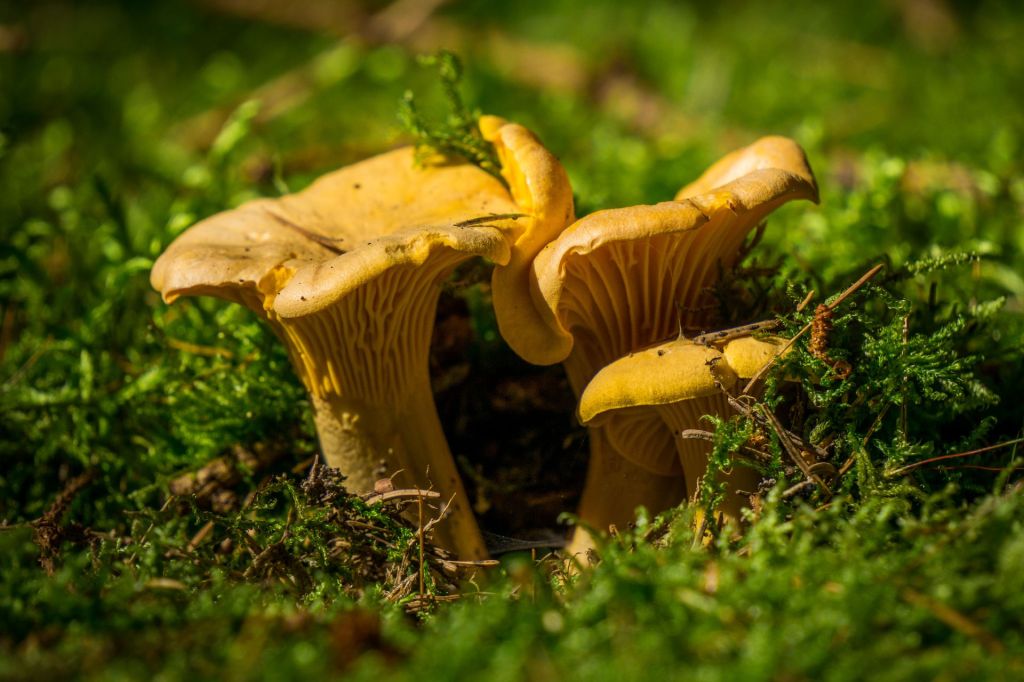
- Chanterelles (Cantharellus spp.): These golden or yellowish mushrooms are often found in forests, particularly in coniferous and mixed woods.
- Oyster Mushrooms (Pleurotus spp.): These mushrooms grow on decaying wood, often on hardwood trees, and are characterized by their fan-like shape and pale colors.
- Lobster Mushrooms (Hypomyces lactifluorum): These are actually a parasitic fungus that grows on other mushrooms, particularly on various species of russula or lactarius mushrooms, giving them a reddish-orange appearance.
- Winter Chanterelles (Craterellus tubaeformis): Also known as yellowfoot, these are smaller and darker chanterelle-like mushrooms that grow during the colder months. Though when comparing them to our typical chanterelles there are quite a few differences. Make sure you know what you’re looking for.
- Porcini Mushrooms (Boletus edulis): Often found in coniferous forests, these large, brown-capped mushrooms have a mycorrhizal relationship with trees.
- Truffles (Tuber spp.): Some varieties of truffles can be found in the Pacific Northwest during these months, particularly under certain tree species like Douglas fir.
Remember, mushroom identification can be tricky and should be done carefully as some mushrooms can be poisonous. It’s always best to be completely certain of the identification before consuming any wild mushrooms.
A few books I use regularly are Steve Trudell’s revised edition “Mushrooms of the Pacific Northwest”. https://amzn.to/484wv6L
Also, one of my favorites due to the breadth of species included is Noah Siegel and Christian Schwarz’s “Mushrooms of the Redwood Coast”. Yes it does include some California species, but here on the West coast we do tend to enjoy many of the connected states. 🙂 You can take a look at it here: https://amzn.to/3Tb5c6r
Last but definitely not least is Daniel Winkler’s book “Fruits of the Forest”. He is one of our favorite speakers at the club and also manages http://www.mushroaming.com. You can find his book for your consideration here: https://amzn.to/3NdDguL
Now…I hope I have given you mycophiles out there some spark to continue the search. Some of these fall and winter fungi are highly sought after and enjoyed by many for culinary variety from the normal grocery species available. I once heard that all of the usual suspects at grocers are varieties of species in the Agaricus genus. Interesting.
Maybe I’ll see you out there!
 Ministry of Making