
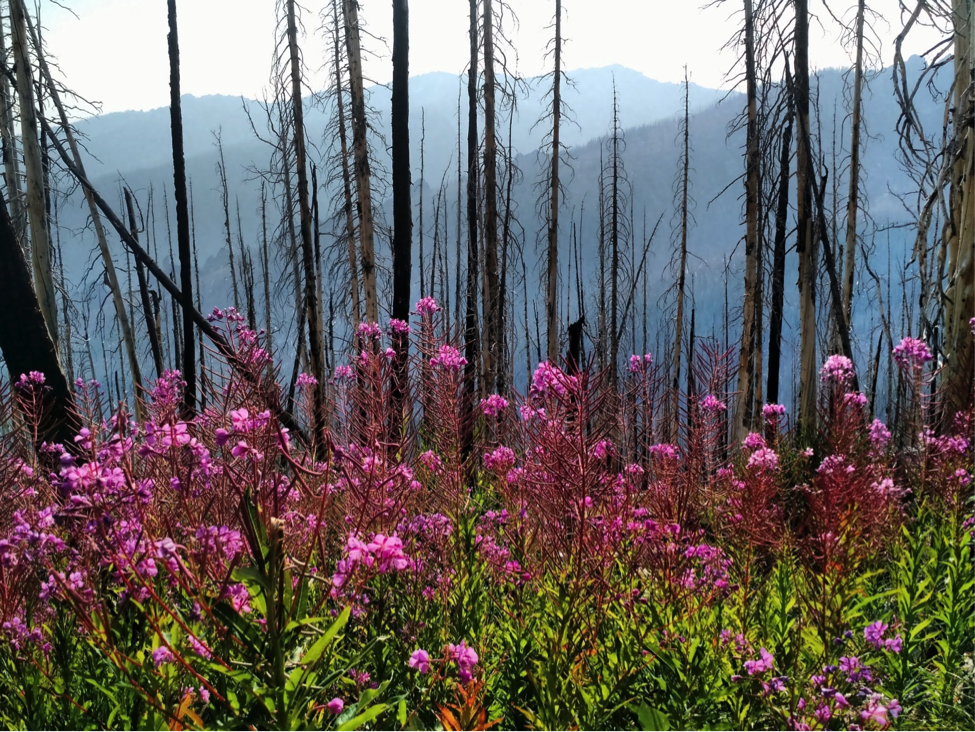
I’ve been out, enjoying Summer, working in the garden, enjoying the nature around me. However, I wanted to drop a line to talk about Fireweed! Have you ever driven around, perhaps in the mountains where a burn has occurred, perhaps where a little town fire in a local wood has happened in the past? Have you seen the tall spires of delightfully magenta/hot pink flowers growing from a dark green lance leaf shaped base? Then you may have seen Fireweed. Not only does it make the BEST honey, my opinion, obviously, it is also useful in your home apothecary. As with everything we talk about here, do your own research and check with your id professionals to be sure you have the right plant and always pay attention to your body if you intend to use this for healing purposes. Allergy or reaction tests are a must and an always!
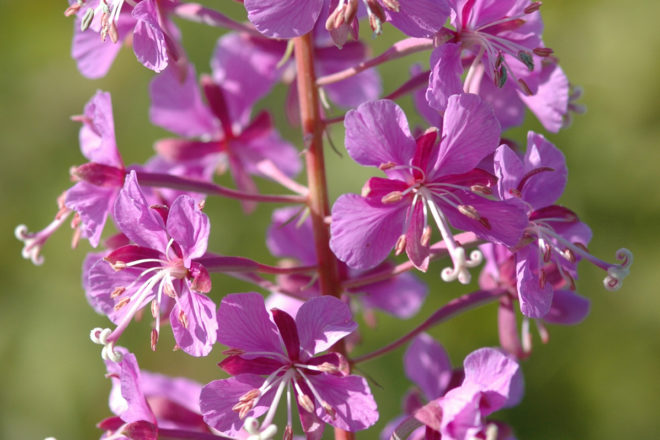
“Fireweed” is indeed a recognized plant in the herbal medicine space. Fireweed (Epilobium angustifolium) is a wildflower commonly found in temperate regions, particularly in North America, Europe, and Asia. It is also known by other names such as rosebay willowherb, great willowherb, and wickup. Not to be confused with the common weedier behavioral willowherb that shows up in our gardens with the tiny little pink flowers, maybe three or so.
Here are some of the potential benefits and compounds associated with fireweed:
Traditional Uses and Herbal Properties: Fireweed has a long history of traditional use by indigenous peoples and herbalists for various medicinal purposes. Some of its commonly attributed properties include:
- Anti-inflammatory: Fireweed has been used to reduce inflammation and soothe irritated tissues, which makes it potentially useful for conditions like sore throats and gastrointestinal issues.
- Astringent: It is believed to have a mild astringent effect, which means it may help constrict and tighten tissues, making it useful for minor cuts and wounds.
- Demulcent: Fireweed contains mucilage, a substance that provides a soothing and protective effect on mucous membranes, making it helpful for soothing respiratory and digestive discomforts.
- Diuretic: Some sources suggest that fireweed has diuretic properties, potentially helping to increase urine production and promoting kidney health.
Phytochemicals and Active Compounds: Fireweed contains various phytochemicals, which are responsible for its potential medicinal properties. While the specific composition may vary depending on factors like location and climate, some of the notable compounds include:
- Tannins: These are responsible for the astringent properties and are known for their ability to precipitate proteins, reducing inflammation and promoting wound healing.
- Flavonoids: Fireweed contains flavonoids like quercetin and kaempferol, which have antioxidant and anti-inflammatory properties.
- Phenolic Acids: Fireweed contains various phenolic acids like gallic acid and ellagic acid, which contribute to its antioxidant activity.
- Vitamin C: Fireweed is a natural source of vitamin C, which supports the immune system and overall health.
It’s essential to note that while fireweed has traditional uses and some scientific evidence supporting its potential health benefits, it is not a substitute for professional medical advice. Herbal remedies may interact with certain medications or have contraindications for specific health conditions.
One other thing well worth noting, Fireweed does well in the garden if you collect some of the seeds from a wild plant. There isn’t really any need to buy seeds, unless you don’t have any local growing plants. If you experiment with Fireweed, please let me know, I’d love to hear about your experience(s). Until next time friends, stay well and visit nature often!
 Ministry of Making