
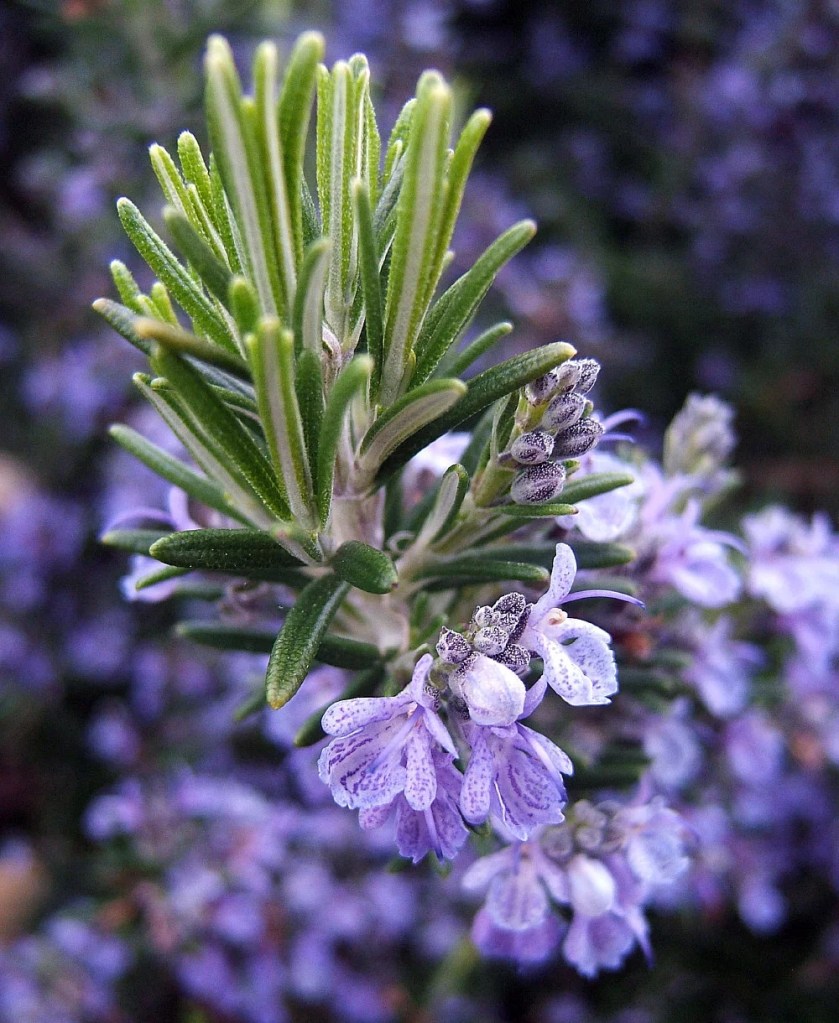
Little purple flowers, what is it about little purple flowers that signals healing. I couldn’t say for sure, but I am grateful every day that little purple flowers are a part of our lives. One such wonder herb that has LPF’s is Rosemary. Ahh the fragrance, the taste, the healing purpose. Originating in the Mediterranean and of course making its way into gardens via so many seed packs. We can be thankful that we know how to recreate an environment that it enjoys. I can’t quite think of anything as pungent and invigorating as freshly picked Rosemary. Rosemary (Rosmarinus officinalis) is an aromatic herb that has been used for various purposes throughout history. Here are some of its historical uses:
- Culinary Use: Rosemary has a long history of culinary use. It is commonly used as a seasoning and flavoring agent in Mediterranean cuisine, particularly in dishes from Italy, Greece, and France. It adds a distinct aroma and flavor to roasted meats, stews, soups, and sauces.
- Medicinal Herb: Rosemary has been valued for its medicinal properties for centuries. In ancient times, it was used as a traditional remedy for various ailments. It was believed to have digestive benefits, relieve headaches, improve memory and concentration, and stimulate circulation. It was also used topically as an antiseptic for wounds and as a hair tonic.
- Rituals and Symbolism: Rosemary has played a significant role in rituals and symbolic traditions. In ancient Greece and Rome, it was associated with memory and remembrance, and was often used in funerals and memorial services. It was also used in wedding ceremonies as a symbol of love, loyalty, and fidelity. In some cultures, sprigs of rosemary were carried to ward off evil spirits or to bring good luck.
- Fragrance and Perfume: The aromatic fragrance of rosemary has made it a popular ingredient in perfumes, soaps, and cosmetics. Its essential oil is extracted and used in various products for its refreshing and invigorating scent.
- Traditional Medicines: Traditional systems of medicine, such as Ayurveda and traditional Chinese medicine, have utilized rosemary for its potential health benefits. It has been used to improve digestion, relieve respiratory conditions, and promote overall well-being.
- Pest Control: Historically, rosemary has been used as a natural insect repellent. Its strong scent helps deter pests, including mosquitoes, moths, and fleas. It was often placed in closets or hung near windows and doorways to keep insects away. There are some pretty sweet giant incenses that are sold on the internet to keep the bugs away and they work a treat. Especially if you get a triangulation going and sit in the middle. Fun! Check them out: https://amzn.to/3OFZmYp
These are just a few examples of the historical uses of rosemary. It continues to be valued today for its culinary, medicinal, and aromatic properties.
I think there is something worth diving into a bit more though. Cognition. With the way our lives and disease is going here in the 21st century, there is an epidemic of cognitive failure. While the medical field is of course still seemingly way too understaffed to perform studies that get us to a “reviewed and approved” status here are the details:
Rosemary contains several compounds that are revered for their potential cognitive benefits. Here are some of the key compounds in rosemary and their effects on cognition:
- Rosmarinic Acid: Rosmarinic acid is a polyphenol found in rosemary. It has antioxidant and anti-inflammatory properties and may help protect brain cells from damage. Some studies have suggested that rosmarinic acid may improve memory and cognitive function.
- Carnosic Acid: Carnosic acid is another polyphenol present in rosemary. It has antioxidant and neuroprotective properties. Studies have shown that carnosic acid may enhance memory and protect against neurodegenerative diseases.
- 1,8-Cineole (Eucalyptol): 1,8-Cineole is a terpene compound found in rosemary that gives it its distinctive aroma. It has been shown to have cognitive-enhancing effects, including improving attention, alertness, and cognitive performance. It may also have a positive impact on mood. Have you ever run your fingers over a sprig of Rosemary while passing a healthy bush? Then lifting your fingers to your nose and inhaling the sweet, woody, herby smell. There’s that moment where you just smile and the next breath you take is a little bit deeper. I contribute that to this compound. It may be a few things, but either way, the answer is Yes.
- Ursolic Acid: Ursolic acid is a triterpenoid compound present in rosemary. It has been studied for its potential neuroprotective effects and its ability to improve cognitive function and memory.
These compounds in rosemary are believed to have various mechanisms of action that contribute to their cognitive benefits. They may help reduce oxidative stress, inflammation, and neurodegeneration, while promoting neuroprotective and memory-enhancing effects. Additionally, the effects of rosemary may vary depending on the preparation, dosage, and individual response.
One preparation that people often point to as being helpful for restoring brain cognition is rosemary essential oil aromatherapy or inhalation.
Inhaling the aroma of rosemary essential oil has been suggested to have cognitive benefits. The scent of rosemary has been associated with improved memory and concentration in various studies. When inhaled, the aroma of rosemary essential oil may have a direct effect on the brain, potentially enhancing cognitive performance and mental alertness.
Research suggests that the compounds present in rosemary, such as 1,8-cineole (eucalyptol), may play a role in these cognitive effects. Inhalation of rosemary essential oil has been shown to increase 1,8-cineole levels in the blood, suggesting that it can cross the blood-brain barrier and exert its effects on brain function.
To utilize rosemary essential oil for cognitive benefits, it can be diffused in a room using an essential oil diffuser or simply inhaling the scent directly from the bottle. Some people also use scented products, such as candles or room sprays, infused with rosemary essential oil to create a cognitive-enhancing environment. The crucial point is to be sure you have 100% pure rosemary essential oil that is therapeutic grade. Hey… I know what you’re thinking and I am telling you now I don’t even sell Dotera. haha!
It’s important to note that while inhalation of rosemary essential oil may have potential cognitive benefits, individual responses may vary. Moreover, it is advisable to use essential oils with caution, following proper dilution guidelines and consulting with a healthcare professional if you have any underlying health conditions or sensitivities.
In our regular ole daily lives it’s also entirely possible to simply add more Rosemary to our foods and as a hot tisane. It can be purchased at most stores in the tea aisle so that should give you an idea of how “normal” this is.
 Ministry of Making