
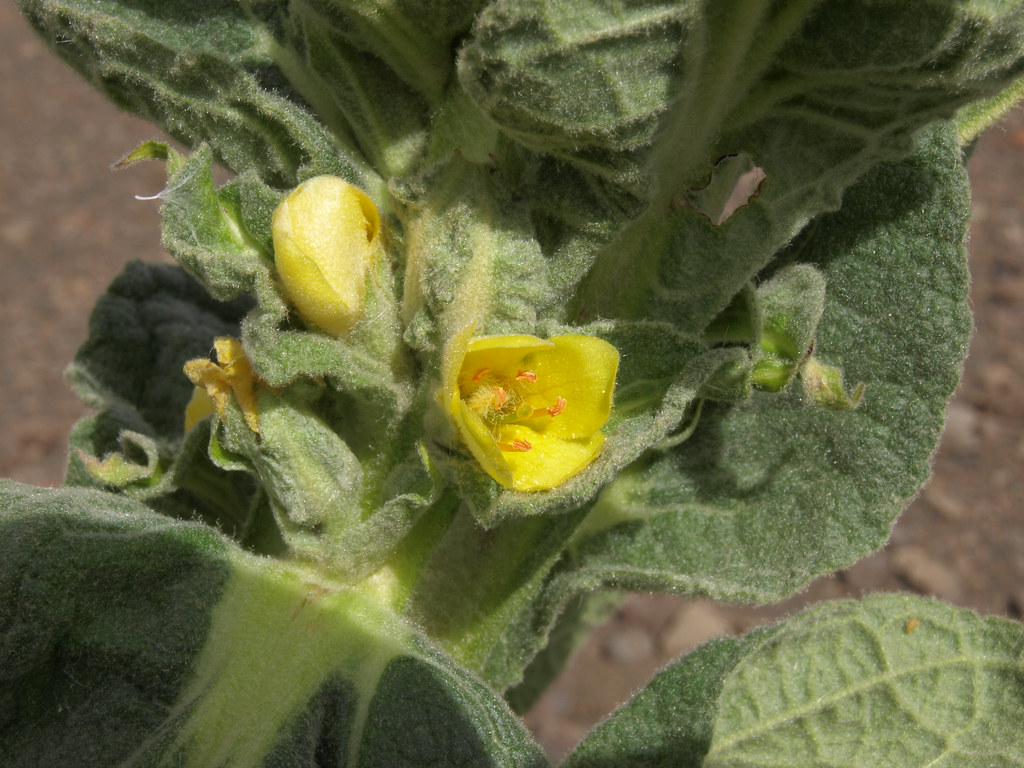
I remember once upon a first time, driving around Winthrop, WA and seeing these plants with massive furry leaves, taller than me spires of yellow flowers and a basal rosette of growth that could be the envy of many. They seemed to grow right out of the place where the asphalt meets the gravel shoulder. So intriguing! Those were some very exciting days. Imagine how ecstatic I was to learn it was a plant called Wooly Mullein. Or in some places, simply Mullein (Verbascum thapsus). Then to find out that this is a plant that has been used for various medicinal and traditional purposes for possibly a millennium or more. Different parts of the plant, such as the leaves, flowers, and roots, have been utilized for their potential health benefits. Of course, while I have worked with this plant personally, it’s important to note that while mullein has a long history of traditional use, scientific research on its effectiveness is limited, and its medicinal use should be approached with caution. Here are some of the reported medicinal and traditional effects of mullein:
- Respiratory Health: Mullein has been traditionally used to support respiratory health. It is believed to have expectorant properties, helping to expel mucus and relieve congestion in the respiratory tract. Mullein leaves are often used in herbal remedies for conditions like coughs, bronchitis, asthma, and colds. Indigenous people would use it as a smudge application for those with bronchial complaints. It may seem counter-intuitive but to some it may seem just right!
- Soothing Properties: Mullein is thought to have soothing and anti-inflammatory effects. It has been used topically in the form of poultices, oils, or balms to alleviate skin irritations, minor burns, wounds, and insect bites.
- Ear Health: Mullein oil, often combined with garlic, has been traditionally used to address earaches and ear infections. The warmed oil is applied to the ear canal to help relieve discomfort and potentially reduce inflammation.
- Anti-inflammatory Effects: Some studies suggest that mullein extracts may possess anti-inflammatory properties. These properties may have potential applications in reducing inflammation in the body, although further research is needed to confirm these effects.
- Antioxidant Activity: Mullein contains compounds that have been found to exhibit antioxidant activity. Antioxidants help protect the body’s cells from damage caused by harmful molecules called free radicals. However, the significance of this antioxidant activity in human health is not well-established.
- Pain Relief: Mullein has been used in traditional medicine for its potential analgesic (pain-relieving) properties. It has been employed as a natural remedy for soothing various types of pain, such as joint pain, muscle aches, and headaches.
Do you have this plant growing near you? Have you partnered with it for any of the above purposes? Would you be willing to share your experiences in the comments below? I would love to hear about them. We were just talking at the mushroom club plant sale about Mullein and many had experienced benefits from its many properties. I consider that a hard win! 🙂


https://amzn.to/3W3cubR – Mullein Tea, mmm, great for fighting colds & allergy symptoms.
 Ministry of Making