

I know you know, but let’s talk about it anyway. There is a “weed” that everyone likes to rail on. It comes in the Spring, is beautiful, but to many, too prolific. 🙂 However, if you pick those flowers when they are nice and yellow in the morning before the bees have taken all the sweet stuff, then WOW. Or you can leave the bees to do their wonderful work and take the flowers later in the day and pick the leaves in the morning for your daily meal prep (small young leaves are best). Either way, however you can, please get some Dandelion into your system if your able to receive its many gifts.
So, let’s talk about it (it would be fun if we could WALK AND TALK). Dandelion (Taraxacum officinale) is a flowering plant that is commonly used as an herbal remedy and also as a food source. Dandelion has SO many nutritive and herbal values, some of which include:
- Nutritional Value: Dandelion is a rich source of vitamins and minerals, including vitamins A, C, and K, as well as calcium, iron, and potassium. It is also a good source of dietary fiber.
- Diuretic Properties: Dandelion has diuretic properties, which means that it can help increase urine output and flush out excess fluids and toxins from the body. This property can be useful in managing conditions such as high blood pressure, edema, and urinary tract infections.
- Anti-Inflammatory Properties: Dandelion has anti-inflammatory properties that can help reduce inflammation in the body. This property can be beneficial in managing conditions such as arthritis, gout, and other inflammatory conditions.
- Digestive Aid: Dandelion can aid digestion by stimulating the production of digestive juices, promoting bile flow, and improving liver function. It can also help relieve constipation and other digestive issues.
- Antioxidant Properties: Dandelion contains antioxidants that can help protect the body against oxidative stress and damage caused by free radicals. This property can be beneficial in reducing the risk of chronic diseases such as cancer, heart disease, and diabetes.
- Skin Health: Dandelion can be used topically to improve the health of the skin. It can help reduce inflammation, fight acne, and improve overall skin health.
- Blood Sugar Regulation: Dandelion may also help regulate blood sugar levels, which can be beneficial in managing diabetes and reducing the risk of other metabolic disorders.
What is the best way to benefit from dandelions many nutritive values, you might ask?
Honestly, Dandelion can be consumed in a variety of ways to obtain its many nutritive values. Some folks make Dandelion flower fritters for heaps sake, so just use your imagination as all parts of this plant are edible. I’m not sure I would want much of the stem due to the concentration of Latex there though, so think that through. Here are some ways to benefit from dandelion:
- Eat the Leaves: Dandelion leaves can be eaten raw or cooked. They can be added to salads, sandwiches, and smoothies. They have a slightly bitter taste, which can be balanced with other sweet or tangy ingredients.
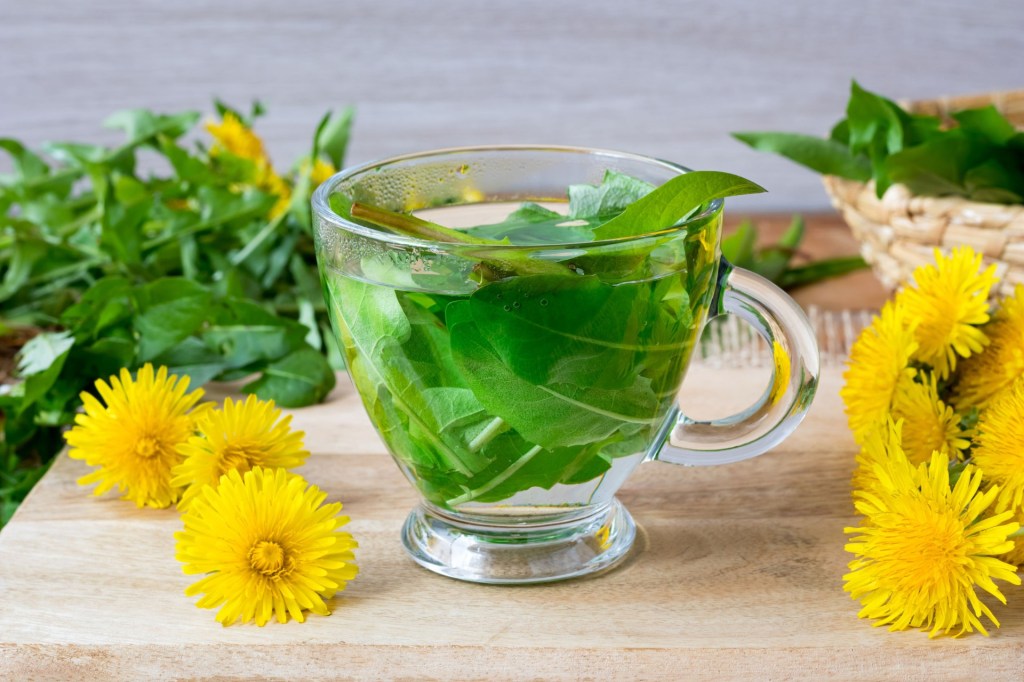
- Make Tea: Dandelion root tea or leaf tea can be made by steeping the roots or leaves in hot water for 10-15 minutes. This can be a soothing and calming drink that can aid digestion, reduce inflammation, and support overall health. For fun and my own satisfaction, I like to place the hot water in a clear French press (image and affiliate link below), with the leaves where the coffee normally goes. I don’t know, it’s just satisfying to see the green leaves there, waiting to deliver all that goodness to me!
- Roast the Roots: Dandelion roots can be roasted and ground to make a coffee substitute that is caffeine-free. This can be a good alternative to coffee for those who are sensitive to caffeine.
- Use as a Supplement: Dandelion is available in supplement form, including capsules, powders, and tinctures. These supplements can provide a concentrated dose of dandelion’s beneficial compounds and can be convenient for those who don’t enjoy the taste of dandelion or have difficulty sourcing it.
- Use Topically: Dandelion can be used topically in the form of creams, lotions, and ointments. These can be used to improve the health of the skin, reduce inflammation, and treat conditions such as eczema and psoriasis.
It is important to note that dandelion may interact with certain medications, such as diuretics and blood thinners, so it is recommended to consult with a healthcare professional before adding dandelion to your diet or supplement routine.

When narrowing the above list down a little, my own personal opinions become more clear to me. I honestly believe the best ways to consume Dandelion to really benefit from its many nutritive values are in adding the herb to your internal systems through ingesting it:
- Eat the Leaves: Dandelion leaves can be eaten raw or cooked. They can be added to salads, sandwiches, and smoothies. They have a slightly bitter taste, which can be balanced with other sweet or tangy ingredients.
- Make Tea: Dandelion root tea or leaf tea can be made by steeping the roots or leaves in hot water for 10-15 minutes. This can be a soothing and calming drink that can aid digestion, reduce inflammation, and support overall health.
- Use as a Supplement: Dandelion is available in supplement form, including capsules, powders, and tinctures. These supplements can provide a concentrated dose of dandelion’s beneficial compounds and can be convenient for those who don’t enjoy the taste of dandelion or have difficulty sourcing it.
I will say it again just in case you skipped it above: It is important to note that dandelion may interact with certain medications, such as diuretics and blood thinners, so it is recommended to consult with a healthcare professional before adding dandelion to your diet or supplement routine.
One thing that a lot of folks don’t really talk about though is over-nuking your nutritive values/compounds. It can be done and it’s just a little sad. So, it is generally recommended to steep herbs in water that is below boiling temperature, around 170-190°F (77-88°C). Steeping herbs in water that is too hot can cause some of the beneficial compounds to break down or be destroyed, reducing their effectiveness.
Different herbs may require different steeping temperatures depending on their specific properties, so it’s a good idea to research the optimal temperature for each herb. In general, delicate herbs such as chamomile and mint should be steeped at lower temperatures, while more robust herbs such as ginger and turmeric can tolerate higher temperatures.
It’s also important to steep herbs for the appropriate amount of time to extract their beneficial compounds without over steeping and causing bitterness. Again, this can vary depending on the specific herb, so it’s important to do some research or follow a recipe or guidelines from a trusted source.
Whew, what a powerhouse plant! I hope this post has been helpful to you. If you partner with Dandelion in a different way, I would LOVE to hear about it. Please leave a comment or send me a message!
https://amzn.to/3FBieTc – Vegetable Glycerin based Dandelion tincture
https://amzn.to/3FvZ6WM – Dandelion tea with hibiscus and ceylon cinnamon (wooohooo)
 Ministry of Making