Have you ever transplanted Borage OUT of your garden and into the compost-heap? Have you ever called a friend and said, hey are you still interested in some Borage, I’ve got lots? Then you might be among a very well populated group. However, I pose to you that time has tried to entreat us to forget why we love Borage and why it loves us. Let’s refresh our memories, together. I don’t know why it would do this, but sometimes the construct by which we measure most things can be a very cruel mistress.
Borago officinalis, commonly known as borage, is a plant species that has been used for various purposes throughout history. Here are some of its common uses:
- Culinary uses: Borage leaves and flowers are often used in cooking as a flavorful herb. The leaves have a cucumber-like taste, and the flowers can be used as a garnish or to flavor drinks and desserts.
- Medicinal uses: Borage has traditionally been used in herbal medicine for a variety of conditions, such as respiratory infections, inflammation, and stress. The plant contains compounds that are believed to have anti-inflammatory and diuretic properties, among other potential health benefits.
- Cosmetic uses: Borage oil, which is extracted from the seeds of the plant, is used in cosmetic products for its moisturizing and anti-aging properties. It is also believed to help soothe skin irritations and promote healthy skin.
- Agricultural uses: Borage is sometimes used as a companion plant in agriculture to help improve soil health and deter pests. It is also sometimes used as a cover crop to prevent erosion and improve soil fertility.
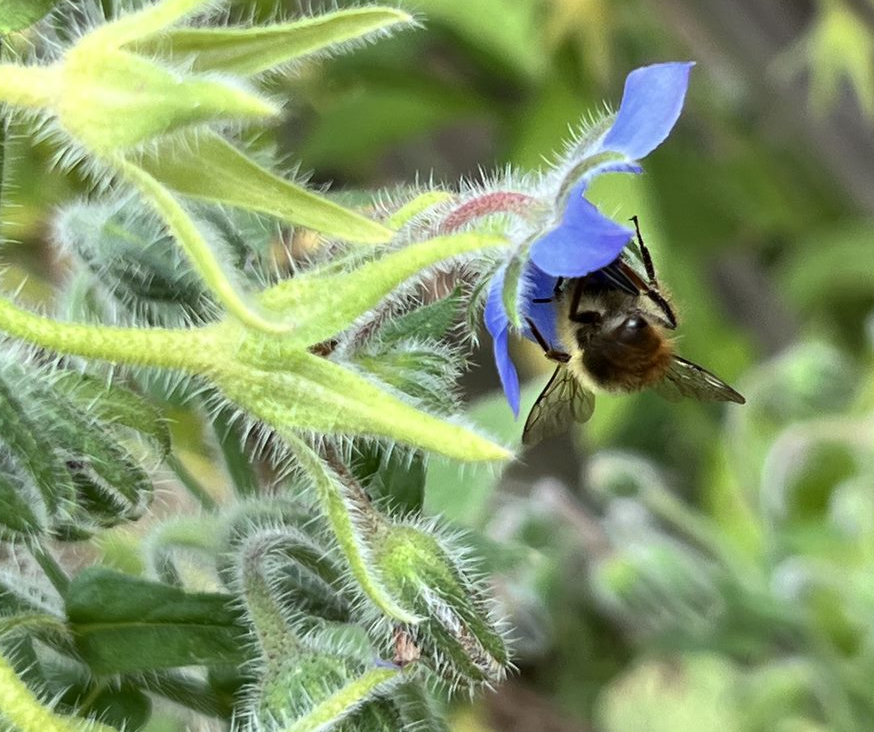
- BEES LOVE IT! If you want to bring all the bees to your yard, definitely plant some Borage. It comes up easy from seed, but transplants from friends are awesome if you get them in time for them to reseed. It is SO rewarding to watch all those furry bumble bottoms go diving.
Overall, Borago officinalis has a wide range of uses and is valued for its culinary, medicinal, cosmetic, and agricultural properties. I can’t think of a reason not to have it around unless you are allergic to bees or strongly dislike fuzzy plants. Give it some thought! I have included a link to a seed source. I also thought I might dabble with a QR code. Probably a mistake, but we’ll never know unless we try. At least I’ve heard people say that. 🙂

 Ministry of Making